
How to Keep Clients Coming Back (Without Chasing Them Every Month)
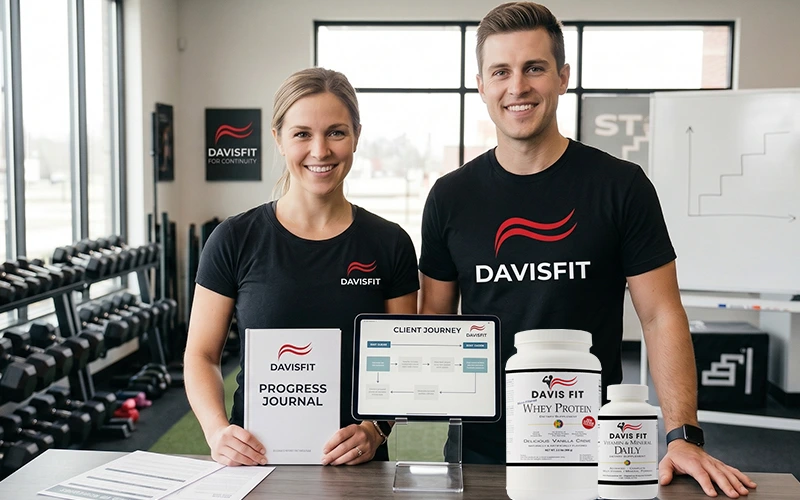
Let’s be honest. Most fitness professionals have experienced this at least once.
A new client signs up full of enthusiasm. They’re motivated. They’re excited. They buy the starter package, show up consistently for a couple of weeks and then… life happens.
Work gets busy. The kids have activities. Vacation rolls around. The dog eats their meal plan.
Before you know it, they’re gone.
The good news..?
Most client drop-off isn’t because you’re a bad coach.
In fact, it’s usually the exact opposite.
Many fitness businesses provide excellent coaching but struggle with continuity.
And that’s where opportunities and revenue quietly slip through the cracks.
If you want clients to stay longer, buy more services and refer more friends, continuity can’t be left to chance.
It has to be built into the business.
Continuity Isn’t Luck. It’s a System.
Some trainers seem to have clients who stick around forever. Others feel like they’re constantly replacing people who disappear after six weeks.
The difference usually isn’t personality, charisma or luck.
It’s systems.
Client continuity simply means giving people a reason to stay connected to your business after the first sale, first challenge, first program or first round of training sessions.
Your clients aren’t just buying workouts. They’re buying:
✅ Guidance
✅ Support
✅ Accountability
✅ Education
✅ A Trusted Resource
✅ A Clear Next Step
When continuity is built into your business, clients don’t have to wonder what happens next.
They already know.
Why Clients Really Leave
Many fitness professionals assume clients leave because they lose motivation.
Sometimes that’s true.
More often, however, clients leave because the journey simply ends.
Think about it. A client finishes six weeks, completes the challenge, reaches their goal and then… crickets.
🚫 No follow-up
🚫 No next phase
🚫 No maintenance plan
🚫 No clear direction
It’s a little like finishing a movie and discovering someone forgot to film the ending.
The coaching may have been fantastic.
The client may have loved the experience.
But if there’s no obvious next step, many people simply drift away.
Start Continuity Before Day One
One of the biggest mistakes fitness businesses make is treating onboarding like paperwork.
Continuity actually starts before the first workout.
The initial conversation should position your program as the beginning of a journey, not a one-time event.
You’re not selling six weeks. You’re selling the first phase of a larger transformation.
That mindset should show up everywhere:
✅ Welcome materials
✅ Starter guides
✅ Progress journals
✅ Habit trackers
✅ Educational resources
✅ Email sequences
✅ Follow-up communication
(Plug for our online course!): Our most successful fitness partners start the client journey with Onboard 101.
When clients see a structured process, something interesting happens.
They trust the process more.
And when they trust the process more, they stay longer.
Build a Staircase, Not a Dead End
One of the easiest ways to improve retention is to stop thinking in isolated offers.
Every service should naturally lead to another service.
For example:
✅ Personal training leads to ongoing coaching
✅ Nutrition coaching leads to accountability programs
✅ Six-week challenges lead to maintenance memberships
✅ Small-group training leads to advanced coaching
✅ Supplement programs support long-term wellness goals
✅ Educational courses reinforce healthy habits
You get the idea. Think of your business as a staircase.
Each step should naturally lead to the next one.
The stronger the staircase, the less likely clients are to step off.
The most successful fitness businesses don’t rely on a single service.
They build an ecosystem of products, services and resources that keeps clients engaged under the same brand.
Create an Ecosystem Under YOUR LOGO
This is where many fitness businesses miss a tremendous opportunity.
Clients don’t simply stay because of accountability. They stay because they become part of a system.
Think about companies like Apple.
People don’t buy a single product. They buy into an ecosystem.
The same principle applies to fitness businesses.
When clients see your logo consistently across multiple touchpoints, your business feels larger, more established and more valuable.
A solid fitness ecosystem might include:
✅ Your website
✅ Your educational content
✅ Your progress journals
✅ Your recipe collections
✅ Your handouts and guides
✅ Your online courses
✅ Your supplement programs
✅ Your email newsletters
✅ Your social media content
Each of these touchpoints reinforces your expertise and keeps your brand top of mind.
The stronger the ecosystem, the stronger the continuity.
Instead of clients purchasing a few sessions, they become connected to an ongoing experience under YOUR LOGO.
Education Keeps Clients Engaged
One of the most overlooked retention tools is education.
Here’s why onboard 101 is so successful among fitness businesses who actively promote it:
Clients are more likely to stay committed when they understand:
✅ What they’re doing
✅ Why they’re doing it
✅ What results to expect
✅ What comes next
That doesn’t mean overwhelming them with a 90-page manual that becomes a very expensive coffee coaster.
Simple is the winning tactic:
✅ Short videos
✅ Quick handouts
✅ Weekly emails
✅ Easy-to-follow lessons
✅ Simple action steps
Small amounts of information delivered at the right time often outperform information overload.
Education also positions you as more than a trainer.
It positions you as a trusted expert.
And trusted experts tend to keep clients longer.
Follow-Up Is Where the Magic Happens
Want to know where most continuity is won or lost?
✅ After the session.
✅ After the challenge.
✅ After the sale.
This is where many businesses go silent.
The reality is that clients need reminders, encouragement and occasional nudges.
Not every day.
Not every hour.
But often enough to stay connected.
Examples include:
👉 Weekly check-ins
👉 Progress celebrations
👉 Milestone reminders
👉 Renewal conversations
👉 Reactivation campaigns
👉 Educational email sequences
A missed week should trigger a follow-up.
A completed challenge should trigger a congratulations message and an invitation to the next phase.
A successful client should hear from you before their motivation starts to fade.
Consistency beats intensity every time.
Recurring Revenue Creates Recurring Relationships
Here’s something worth remembering.
Recurring revenue isn’t just about making more money.
It’s about creating more opportunities to serve your clients.
Examples might include:
✅ Memberships
✅ Monthly coaching
✅ Supplement programs
✅ Online education
✅ Accountability groups
✅ Lifestyle coaching
All of these create ongoing touchpoints that keep clients engaged.
That doesn’t mean every business needs a low-cost membership model.
Different markets respond to different approaches.
But every fitness business should have something that keeps the relationship moving forward.
The more reasons clients have to stay connected, the more likely they are to do exactly that.
Measure What Matters
If you want to improve continuity, pay attention to more than monthly revenue.
Track metrics such as:
👉 Average client lifespan
👉 Repeat purchase rates
👉 Program renewals
👉 Upsell conversions
👉 Reactivated clients
👉 Referral rates
These numbers tell a story.
They reveal where people are dropping off and where your systems may need strengthening.
If clients are buying once and disappearing, the issue usually isn’t advertising.
It’s what happens after the sale.
Final Thoughts
The fitness businesses that grow the fastest aren’t always the ones with the biggest advertising budgets or the flashiest social media posts.
They’re the ones that make it easy for clients to stay.
They provide:
✅ Structure
✅ Support
✅ Education
✅ Accountability
✅ A clear next step
When you combine all of those elements under YOUR LOGO, continuity stops feeling like a constant battle.
Instead, it becomes part of the business model.
Build a client journey that feels organized, professional and complete.
Create an ecosystem that serves your clients long after the first session.
Do that consistently and you’ll spend a lot less time chasing new clients and a lot more time serving the ones you already have.